
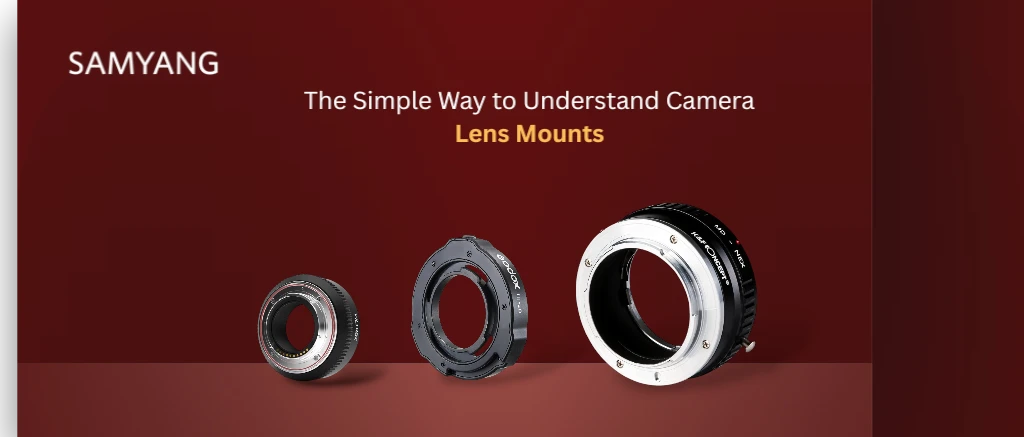
Understanding camera lens mounts can feel confusing at first, but the idea is actually simple once you know the basics. A lens mount is the connection point where your camera lens attaches to the camera body. Every brand has its unique mount and this implies that not all lenses can be used on any camera. Most importantly, understanding mounts will allow you to purchase the gear you need without spending lots of money on unnecessary purchases. Photographers usually change lenses according to their work, which makes the selection of the right mount even more significant.
Different mounts offer different features and technologies, such as autofocus speed or stabilization support. Your shooting experience depends largely on this connection point. Understanding mounts saves you from buying lenses that won’t fit your system. For instance, Canon, Sony, Nikon, and Panasonic all follow different mount systems.
This lens mount guide breaks everything down into simple language so you can choose with confidence. By the end of the reading, you will be aware of the mounts available, their differences, and the ones that suit your photography style the most. Above all, the correct knowledge can make you invest in lenses that fit perfectly in your camera.
What Is a Lens Mount?
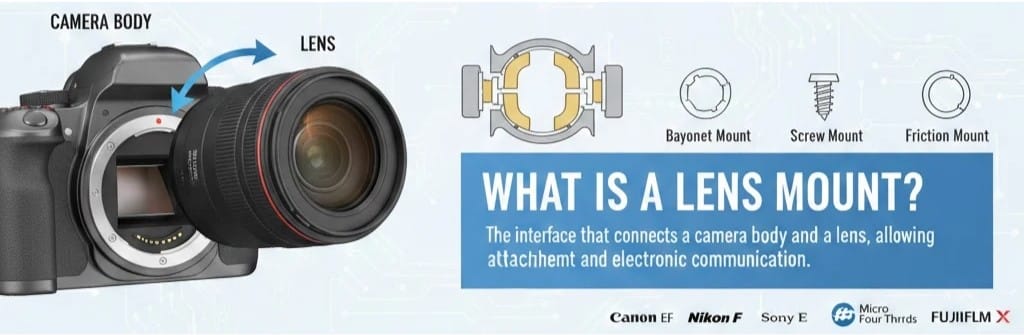
A lens mount is the metal or plastic ring that attaches the lens to your camera. It includes electrical contacts, locking points, and alignment marks that help the lens sit correctly on the body. Because of this, both the lens and camera can communicate smoothly. For instance, autofocus, aperture control, and stabilization features rely on this communication. Without the proper connection, these features either won’t work or will perform poorly.
Each brand develops its own system, which means a lens must be designed for that specific mount. In other words, a Canon lens cannot directly fit a Sony camera unless you use a lens mount adapter. Adapters don’t always support every feature, so direct compatibility is usually better.
To clarify, camera lens mounts are not just physical attachments—they’re also digital communication systems. They decide how well your gear will perform. These mounts influence what lenses you can upgrade to in the future. Consequently, knowing your mount type allows you to build a better, long-lasting camera setup.
A mount decides how the lens sits in front of the sensor, which affects image quality and performance. With this understanding, you can choose lenses that fit perfectly and perform reliably every time.
Common Types of Lens Mounts Explained
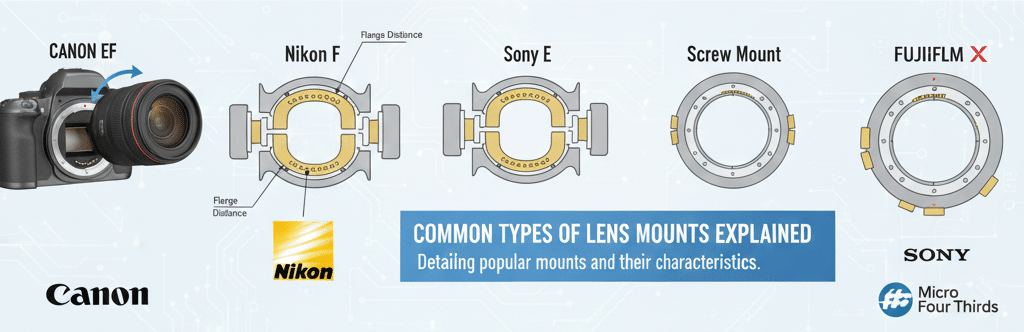
Different camera brands use unique lens mounts, each with varying size and compatibility. Knowing the main types helps you choose lenses that fit your gear perfectly.
EF Mount – Camera lens

The Canon EF mount is one of the most widely used systems in photography. It supports full-frame and APS-C cameras, making it flexible for many shooters. EF lenses are known for strong autofocus and reliable optical quality. EF-S lenses fit only APS-C bodies but remain lightweight and budget-friendly. Because of this, Canon users get plenty of choices across zooms and primes. In addition, third-party brands also support this mount. Overall, it’s a dependable system for beginners and advanced photographers.
E Mount (Sony Mirrorless Cameras)

The Sony E mount is built for mirrorless models. It offers fast communication and excellent autofocus performance. Sony leads in mirrorless innovation, this mount supports advanced features like eye tracking and real-time AF. Simultaneously, it works with both APS-C and full-frame lenses, giving creators more options. The mount is popular among travelers, filmmakers, and professionals.
Furthermore, many third-party brands support it, including the Samyang lens lineup. Samyang offers a wide range of affordable lenses specifically for Sony E-mount cameras. These lenses deliver fast autofocus, high-quality optics, and reliable performance, including primes, zooms, and cine lenses. Lightweight and travel-friendly, Samyang E-mount lenses provide versatility for portraits, landscapes, or cinematic video while ensuring full compatibility with both APS-C and full-frame systems.
PL Mount – Professional Cinema Camera lens

The PL mount is a top choice in the filmmaking industry. Built for cinema cameras, it offers strong durability and precise alignment, which is essential for high-end productions. The mount supports large, heavy cinema lenses without flexing. At the same time, it maintains accurate focusing even during complex shoots. PL lenses deliver outstanding sharpness and color quality. Samyang offers PL mount lenses through its XEEN line, designed for cinema cameras, featuring full-frame coverage, declicked apertures, consistent gear positions, and color-matched cine kits. For serious filmmakers, the PL system remains a reliable, professional-standard option.
RF Mount – Mirrorless Camera Lens

Canon’s RF mount is designed for its full-frame mirrorless cameras. It provides fast communication between the lens and body, resulting in smooth autofocus and excellent clarity. RF lenses offer advanced optical designs that reduce distortion and improve low-light performance. Canon continues to expand this lineup with cutting-edge zooms and primes. Since RF bodies are compact, the lenses also balance well. The RF system is ideal for creators who want modern technology with strong image quality.
L-Mount– Camera Lens

The L-Mount system offers flexibility for both full-frame and APS-C sensors, delivering sharp, high-quality performance with durable build and reliable communication. Samyang’s AF 35-150mm F2-2.8 L is the first L-Mount zoom lens, providing wide-angle versatility and bright aperture for professional creators. Compatible with Panasonic, Leica, SIGMA, Blackmagic Design, and DJI, it’s a must-have lens for ultimate convenience and creative freedom.
Micro Four Thirds (MFT)– Camera Lens

People who travel, vlog, or make documentaries often like the Micro Four Thirds system. Its lenses and cameras are small and light, which is good for moving around. Plus, MFT lenses give you a good depth of field and zoom range.
Because the sensor is smaller, you get more zoom with your lenses, which is great for taking pictures of animals or sports. Many brands support this mount, so you have a lot to pick from. The MFT system is still a popular choice if you want something small that still takes good pictures.
Why Does Lens Mount Compatibility Matter?
Lens mount compatibility is crucial for photographers and creators. It ensures your lens physically fits and communicates properly with your camera, supporting autofocus, stabilization, and exposure control. Matching the right mount avoids wasted money, protects your investment, and guarantees smooth performance.
Choosing lenses designed for your camera brand—like Canon mounts for Canon cameras—helps with long-term upgrades and prevents costly replacements. Proper compatibility delivers reliable results in fast action, low light, or video work, while letting you build a strong lens collection that suits your shooting style.
How to Choose the Right Lens Mount for Your Camera?
Choosing the right camera mount depends on your gear, shooting style, and future plans. Matching the right mount ensures better performance and lens compatibility.
Check Your Camera’s System
Check your camera model and its lens mount before buying lenses. Each brand has unique mounts—Sony and Canon are not interchangeable without adapters. Using the correct mount ensures proper autofocus, stabilization, exposure, and a secure fit during shoots.
Think About Your Shooting Style
Your shooting style also affects which mount works best for you. For example, portrait photographers may prefer mounts with access to bright prime lenses. Videographers might choose mounts that support advanced autofocus and stabilized lenses.
Travel photographers often look for lightweight options. Each mount comes with strengths suited tdifferent needs. The availability of specialized lenses should influence your decision. Ultimately, matching your mount to your style gives you better results and a smoother workflow.
LK Samyang Lens Mount Options:
Samyang lenses are available in multiple mount options, making them compatible with a wide range of camera systems. Each lens is designed to match the camera’s electronic features, ensuring smooth autofocus and clean results. With mounts for both full-frame mirrorless and DSLR bodies, Samyang offers a perfect balance of quality and affordability, making them a practical choice for beginners and professionals alike.
Below is a simple compatibility table to help you find the right Samyang lens for your camera. Learn more about LK Samyang.
| Lens Mount | Sensor Type | Camera Type / Notes | Recommended Samyang Lenses |
| Sony E‑mount | Full-frame & APS-C | Mirrorless cameras | Most prime & zoom lenses, cine lenses |
| Canon EF | Full-frame & APS-C | DSLR cameras | Popular prime & zoom lenses |
| Canon EF‑M | APS-C | Mirrorless cameras | Select APS-C primes and zooms |
| Canon RF / RF-S | Full-frame & APS-C | Mirrorless R-series cameras | RF lenses, some cine options |
| Nikon F | Full-frame & APS-C | DSLR cameras | Standard prime & zoom lenses |
| Fujifilm X | APS-C | Mirrorless cameras | APS-C primes & zooms |
| Micro Four Thirds (MFT) | Micro Four Thirds | Mirrorless cameras | Compact primes & travel zooms |
| L‑Mount | Full-frame & APS-C | Mirrorless cameras under L-Mount Alliance | AF 35‑150mm F2‑2.8 L, other L-mount primes |
| Other / Legacy | Varies | Manual focus or older lenses (Pentax K, Samsung NX, etc.) | Specialty or cine lenses |
Final Thoughts
To sum up, understanding camera lens mounts makes choosing the right lens far easier. With the LK Samyang Lens Mount Guide, you can avoid compatibility issues and make smarter decisions about your gear. Each mount system offers unique advantages—whether you shoot portraits, travel, film, or commercial projects—and selecting the right one ensures smoother performance and reliable results.
Knowing your mount also helps you build a lens collection that grows with you. Whether you’re adding a new lens, switching systems, or planning upgrades, Samyang’s mount options give you confidence and flexibility. The right mount guarantees that your lenses work seamlessly with your camera, keeping your photography consistent and enjoyable.
Explore the LK Samyang Lens on our website to find lenses perfectly matched to your system and unlock professional-quality results with ease.
Frequently Asked Questions
Can I use a Canon EF lens on a Sony E-mount camera?
Yes, you can put a Canon EF lens on a Sony E-mount camera if you use an adapter that makes the lens fit. Keep in mind that the autofocus might not be as fast, and image stabilization could act a little differently. Still, it’s a useful option for mixing systems.
What does “flange distance” mean in lens mounts?
Flange distance is the space between the camera’s mount and the sensor. This measurement matters for camera lens fit. If it’s shorter, you can use more types of lenses with adapters. If it’s longer, you have fewer choices. Basically, it decides what lenses will focus right on your camera.
Are PL mounts better than EF mounts?
A PL mount is stronger and more reliable for cinema work. It is designed to handle big lenses and advanced systems. EF mounts are more common and lighter but aren’t as strong. What you pick depends on what you shoot, how much you want to spend, and what camera you have.
Which Samyang lenses are available in multiple mounts?
Several Samyang lens models come in different mounts, including EF, E, RF, X-mount, and Micro Four Thirds. This helps creators use the same lens across systems. It also offers flexibility when upgrading gear or switching between mirrorless and DSLR cameras.
