
Wide angle lenses are popular for landscapes, interiors, and creative shots. They help you fit more into the frame and tell a bigger visual story. However, many photographers feel disappointed when their photos show wide angle distortion, resulting in stretched faces, buildings, or straight lines. This Wide Angle Photos problem can appear even with a good camera lens and proper exposure.
The good news is simple. Most distortion issues are not mistakes they are a natural behavior of wide lenses. Once you understand what causes them, fixing results becomes much easier. With a few shooting adjustments and smarter lens choices, you can keep images natural and professional.
This guide explains why wide-angle distortion happens and how to control it. Whether you are shooting portraits, architecture, or video with an LK Samyang Cine lens⇗, these practical tips will help you improve results without changing your creative style.
Why wide angle photos Look Distorted
Wide-angle lenses capture a very broad field of view. To do this, they stretch space near the edges of the frame. As a result, objects closer to the lens appear larger, while distant objects shrink. This effect is the main reason wide-angle distortion becomes visible.
Another cause is camera position. When the lens is tilted up or down, vertical lines bend. Faces, walls, and buildings can look unnatural. This is often mistaken as a wide angle lens problem, but it is mostly about shooting technique.
Lens design also plays a role. Some lenses control distortion better than others. Higher-quality optics reduce bending and stretching. That is why many photographers trust LK Samyang⇗, often considered the best lens brand in Pakistan, for controlled wide-angle performance.
Types of Wide Angle Photos Distorted
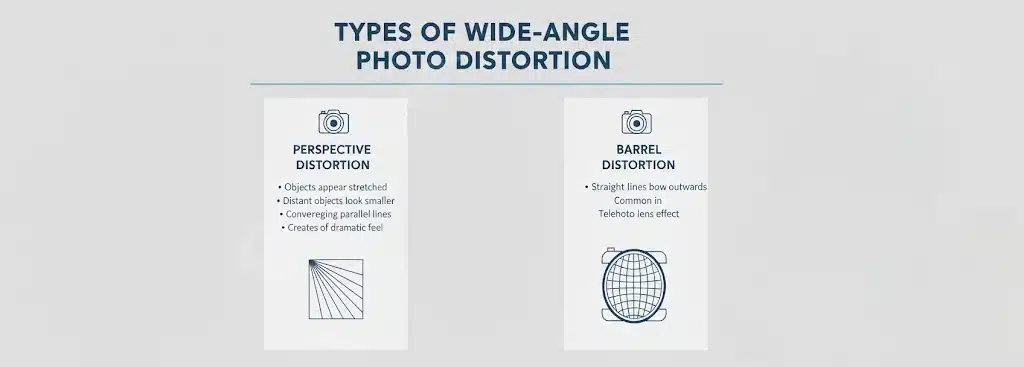
Wide-angle distortion usually appears in two main forms. Each affects images differently. Knowing the difference helps you apply the right correction technique faster.
Barrel Distortion
Barrel distortion causes straight lines to curve outward from the center of the frame. This is common in ultra-wide lenses, especially at the widest focal lengths. Buildings may appear rounded, and interiors may feel inflated.
This type of wide-angle distortion is optical and depends on lens design. While editing software can correct it, better lenses reduce it naturally. Many LK Samyang wide lenses are engineered to minimize barrel distortion, making them reliable for architecture, real estate, and video work where straight lines matter.
Perspective Distortion
Perspective distortion is not a lens defect. It happens because of distance and angle. When you shoot too close, subjects near the camera stretch, while backgrounds compress. Faces may look wider, and objects near edges appear pulled.
This effect is common in portraits and group photos. It is often confused with a wide angle lens problem, but it is actually a positioning issue. Learning how to manage distance is the key to fixing this type of wide-angle distortion.
Simple Camera Tricks to Reduce Distortion

You do not need complex tools to fix distortion. Small shooting habits can greatly improve results. These wide angle photography tips work with any brand or setup.
Keep the Camera Level
Tilting the camera causes lines to bend unnaturally, especially in architecture and interior shots. Keeping it level helps verticals stay straight and balanced. This simple habit reduces visible wide-angle distortion in buildings, walls, and door frames. It also makes composition feel more natural and professional, saving time in editing and reducing the need for heavy correction later.
Step Back from the Subject
Shooting too close exaggerates size differences between the foreground and background. Faces can look stretched, and objects may feel out of proportion. Step back slightly to keep proportions natural and realistic. This small adjustment is one of the easiest ways to fix image bending, especially in portraits, group photos, and people-focused shots.
Avoid Placing People Near the Edges
Edges stretch the most in wide-angle frames. When people stand near the edges, faces and bodies can appear wider or pulled outward. Keep faces and important details closer to the center to avoid unnatural shapes. This approach helps prevent wide angle photos distorted effects and keeps subjects looking natural and flattering.
Choose the Right Focal Length
Focal length selection matters more than many photographers realize. Not every shot needs the widest view. Smart choices reduce distortion without sacrificing creativity.
Many professionals recommend moderate wide focal lengths instead of extreme settings. This approach is especially useful when using an LK Samyang Cine lens⇗ for video or hybrid shoots. Balanced focal lengths offer wide coverage while keeping proportions realistic and controlled.
Don’t Always Use the Widest Setting
Ultra-wide settings exaggerate edges and stretching. Zoom in slightly or choose a less extreme focal length. This reduces wide-angle distortion while still capturing enough scene context.
This tip is one of the easiest ways to manage a wide angle lens problem. It works well for portraits, interiors, and commercial work. High-quality lenses from a best lens brand in Pakistan like LK Samyang perform especially well at these balanced focal lengths.
Conclusion – Wide angle photos Distortion Is Easy to Control
Wide-angle lenses are powerful creative tools. Distortion does not mean failure, it means understanding how space is captured. Most wide-angle distortion issues come from positioning, angle, or focal length choices, not from bad equipment.
By recognizing barrel distortion and perspective distortion, using smart camera techniques, and choosing the right focal length, you can fix problems before they happen. Paired with a well-designed camera lens, these habits deliver clean, professional results.If you want deeper clarity on lens choices, read our guide: Wide Angle or Telephoto Lens | Which Is Better for You? ⇗ It helps you decide which lens suits your shooting style and explains why LK Samyang lenses are an affordable, budget-friendly, and reliable option for photographers and filmmakers who value creative control and consistent performance.
Want to master photography? Read our guide on the different types of camera lenses explained.
Frequently Asked Questions
Why do faces look weird in wide-angle photos?
Faces look strange in wide-angle photos because the lens exaggerates perspective at close distances. Features closer to the camera, like the nose, appear larger, while ears and edges stretch backward. This perspective distortion is common when shooting portraits too close with wide-angle lenses.
Can wide-angle distortion be fixed completely?
Wide-angle distortion cannot be removed completely, but it can be reduced significantly. Shooting with better framing, stepping back, keeping the camera level, and using lens correction profiles all help. In most cases, these adjustments make wide-angle photos look natural and visually balanced.
Should I avoid wide-angle lenses for portraits?
You do not need to avoid wide-angle lenses entirely for portraits. However, they work best when you keep some distance from the subject and avoid edge placement. Used carefully, wide-angle lenses can create environmental portraits without unflattering perspective distortion.
Does lens quality affect distortion?
Yes, lens quality plays an important role in distortion control. Higher-quality camera lenses are designed to reduce optical issues like barrel distortion. While all wide lenses show some distortion, better lens design makes it easier to manage and correct during shooting or editing.
Is distortion worse on smartphone wide-angle cameras?
Distortion is often more noticeable on smartphone wide-angle cameras. Smaller sensors and ultra-wide designs exaggerate perspective and stretching, especially near the edges. Software correction helps, but careful framing and distance are still important to reduce distorted shapes in mobile photography.
